
Cuban Tody : A Complete Guide for Birdwatchers and Wildlife Photographers
Discover One of Cuba’s Most Colorful Endemic Birds
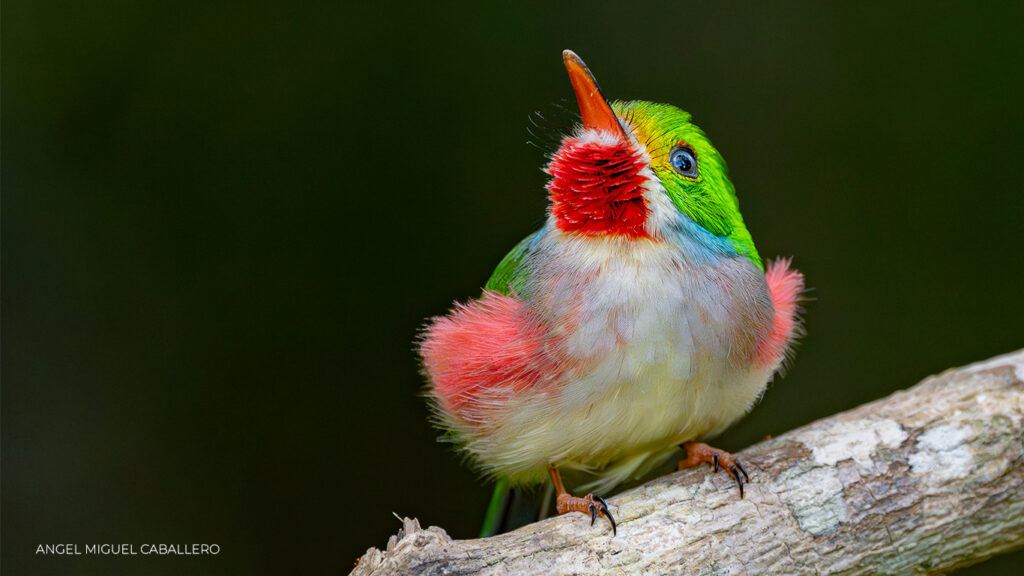
The Cuban Tody (Todus multicolor) is one of the most iconic and visually striking bird species found in Cuba. This small, brightly colored bird is endemic to Cuba, meaning it occurs nowhere else in the world, making it a key target for birdwatchers and wildlife photographers.
Measuring approximately 10–11 cm in length and weighing around 5–6 grams, the Cuban tody is a compact bird with a large head and a thin, flattened bill.
Why the Cuban Tody Is a Must-See for Bird Photography
The Cuban tody stands out due to its extraordinary coloration and behavior:
- Bright iridescent green upperparts
- Distinct red throat and pink flanks
- Blue ear patch and yellow facial markings
- Compact body ideal for close-up photography
These features make it one of the most photogenic birds in the Caribbean. Despite its small size, its vivid colors and relatively approachable behavior make it highly attractive for both amateur and professional photographers.
Distribution and Best Locations in Cuba
The Cuban tody is widely distributed across Cuba and nearby islands, where it lives year-round.
It can be found in a variety of habitats, including:
- Forest edges and dense woodlands
- Coastal vegetation
- Tropical forests and lowland areas
- Areas near rivers and streams
Because it is a non-migratory species, visitors can observe it throughout the year, making it a reliable target for birdwatching trips.
Behavior and Feeding Habits
The Cuban tody is typically seen alone or in pairs, often perched quietly before making short flights to capture prey.
Its diet consists mainly of:
- Insects
- Spiders
- Small invertebrates
This species hunts by sallying from a perch, a behavior that offers excellent opportunities for action photography.
It is also known for its distinctive vocalizations and wing sounds, which can help birdwatchers locate it even in dense vegetation.
Breeding and Nesting Behavior
One of the most interesting characteristics of the Cuban tody is its nesting strategy. Unlike many small birds, it often builds nests by digging tunnels in earth banks or using cavities in wood.
These tunnels can be around 30 cm long and end in a chamber where eggs are laid and incubated by both parents.
This behavior is particularly interesting for wildlife observers and adds to the species’ uniqueness.
Conservation Status and Responsible Tourism
The Cuban tody is currently classified as Least Concern, indicating that it is not considered globally threatened.
However, responsible birdwatching practices are still essential:
- Avoid disturbing birds during nesting
- Maintain a respectful distance
- Support sustainable and local tourism initiatives
Responsible tourism helps preserve Cuba’s ecosystems and ensures long-term opportunities for birdwatching.
Why Cuba Is a Top Destination for Birdwatching and Photography
Cuba is one of the most important birding destinations in the Caribbean due to its high number of endemic species. The Cuban tody is among the most recognizable and sought-after birds on the island.
Visitors traveling for:
- Birdwatching in Cuba
- Wildlife photography tours
- Endemic bird species
will find the Cuban tody to be one of the highlights of their experience.
Plan Your Birdwatching Experience in Cuba
For the best chances of observing and photographing the Cuban tody, working with experienced local guides is highly recommended. Their knowledge of habitats and behavior significantly increases encounter success.
Whether you are an experienced wildlife photographer or a first-time birdwatcher, encountering the Cuban tody in its natural habitat is a memorable and rewarding experience.